Collections Citations

Eliana Perotti on L’architettrice

In the historical novel by the Roman writer Melania Mazzucco, the long life and work of the painter and architect Plautilla Bricci (1616-1705) are part of a precise but entertaining narration, which develops against the background of Baroque Rome. As a protagonist of the culture of her time, Plautilla appears alongside figures such as Gian […]

8 April, 2021

Eireen Schreurs on Organicism in Nineteenth Century Architecture

I have read parts of this book by the Leiden art historian Caroline van Eck for my PhD research on material culture in architecture, and I kept picking it up because is so insightful, but also because it is written so elegantly. Each chapter is systematically set up but also refreshingly compact, and every paragraph formulates ideas you […]

16 April, 2021

Efua Boakye on Bad Behaviour

Bad Behaviour consists of multiple short stories. Set in 80s New York, Gaitskill’s narratives capture the essence of the city through the way the characters interact with one another. Not only are the stories in the book about interpersonal relationships and how people treat each other, but the descriptions of the spaces that the characters […]

31 January, 2024

Dimitri Bleichenbacher on The Triumphant Progress of Market Success

How are artists trained today? What service do they provide? How much is an artwork worth? What is the market price? What is value? Why is ZHdK (Zurich University of the Arts) no longer decentrally spread over the city of Zürich? Is Toni-Areal really the place where contemporary artists are educated? Why in an impermeable […]

15 January, 2024

Despina Stratigakos on Architecture in the Family Way

In Architecture in the Family Way: Doctors, Houses, and Women, 1870-1900, Annmarie Adams explores the middle-class home in nineteenth century England as a battleground among health reform minded women, doctors, and architects. Middle-class women positioned themselves as the healers of houses, which Victorians considered toxic and disease-ridden, and thus a potential mortal danger to their […]

28 February, 2021

Cristina Fusco on The Mushroom at the End of the World

  Anna Tsing unravels stories of hidden ecologies emerging around the matsutake mushroom on different continents, unveiling the mushroom as an emotional anchor, a commodity, and a sign of resurgence in disturbance-based ecosystems. These disobedient ecologies, arising from deteriorated grounds, fascinate me as an alternative way of thinking about the relationship between non-human beings, architecture […]

20 May, 2025

Claudia Ng on On The Fringe

Gwendolyn Wright explores the historical challenges women face in the field of architecture. She highlights how architectural practice is influenced by rigid sexual stereotypes and how women tend to have segregated roles in the periphery. She dissects the experiences of women from discriminatory hiring, salary, and advancement opportunities to double standards like discrediting domestic architecture […]

11 November, 2023

Claudia Mion on La Théorie du diamant

‘La perfection de l’acte créatif requiert de l’amour, et donc de la liberté’. Elisa Valero is an architect and a teacher. Her work, demanding and rigorous, is oriented towards the transmission of an architecture that is thought as much as built. This book, which reads like a manifesto, is a kind of first lesson in architecture. In […]

3 January, 2022

Clara Maria Puglisi on An Interrupted Life

Etty Hillesum (1914–1943) was a Dutch Jewish writer whose diaries, written during the Nazi occupation of the Netherlands, offer an intimate and profound reflection on life, memory, and personal resilience. She was a woman of extraordinary intellectual independence, defying traditional gender roles with her deeply introspective and philosophical approach to existence. Unlike many of her […]

7 July, 2025

Chiara Linsalata on The Restitution of African Cultural Heritage

In the context of the Rietberg Museum in Zurich, one cannot overlook the compelling discourse on cultural heritage articulated by Felwine Sarr and Bénédicte Savoy in their text The Restitution of African Cultural Heritage: Toward a New Relational Ethics. I am particularly intrigued by their argumentation regarding the ethical dimensions of acquiring and exhibiting African […]

8 November, 2023

Che Facchin on Culture Strike: Art and Museums in an Age of Protest

The Reading Circle started off with a separation of the attendees into groups. Every group would receive a certain perspective into the world of the Kunsthaus, all of which were then discussed collectively. The visit confirmed many opinions I had already had of highly institutionalized museums, like the atmosphere of tension or the high threshold […]

15 January, 2024

Charly Jolliet on De l’éclectisme au doute

A WHITE SANCTUARY E-1027, a house born from a collaboration between Eileen Gray and Jean Badovici, was conceived and designed with emotions. It reflects their shared ideals and their individual perspectives while also embodying their relationship. Gray brought an acute understanding of how people live, creating spaces that respond to both practical needs and emotional […]

6 January, 2025

Charlotte Gwendolyn Arn on The Restitution of African Cultural Heritage

Reading Circle 01.11.2023 at Museum Rietberg with Studio Caruso The origin of objects has always been characterised by the Latin prefix “Ex”: extraction, exploitation and export were the determining principles that led the things of everyday, spiritual, religious and cultural life from the colonised countries to the colonising countries. The report by Bénédicte Savoy and […]

8 November, 2023

Caroline Voet on Wanderlust: A History of Walking

In her book Wanderlust, Rebecca Solnit unravels walking throughout time as a bodily experience interwoven with culture, politics, and society. Whatever the story or background, walking is always put in relation to the space that is walked in or at. From the perspective of this physical dimension, Solnit lets people bodily enter a story. Walking […]

3 May, 2021

Carmen Espegel on Mujeres de la Bauhaus, de lo bidimensional al espacio total

Nos encontramos ante un apasionante escrito donde Josenia Hervás registra la historia de la Escuela de la Bauhaus desde una perspectiva singular y novedosa, la de género, que permitirá comprender, de forma más amplia y objetiva, lo que aconteció dentro de los muros de tan innovadora escuela. Entre los consabidos relatos e imágenes de esta […]

22 May, 2024

Carla Capaul on Annelise Leu, die Schweizer Hotelpionierin

In the summer of 2024, Carla Capaul, director of the Hotel Alpina Lumbrein in Val Lumnezia, Graubünden, and Jaehee Shin, editor at Women Writing Architecture, met in the gardens of zum Alten Löwen in Zurich to talk about Annelise Leu, Switzerland’s first female hotelier, and her granddaughter Nina Zumthor, who has written a book about […]

2 October, 2024

Camilla Alves Nunes Köppel on The Triumphant Progress of Market Success

A discussion with a fellow student made me think that everything in this day and age is dependent on money. People set a price for all objects. Market players are given a decisive role in determining artistic value, thus linking the art world with the market world. The Reading Circle group represented this connection between […]

15 January, 2024

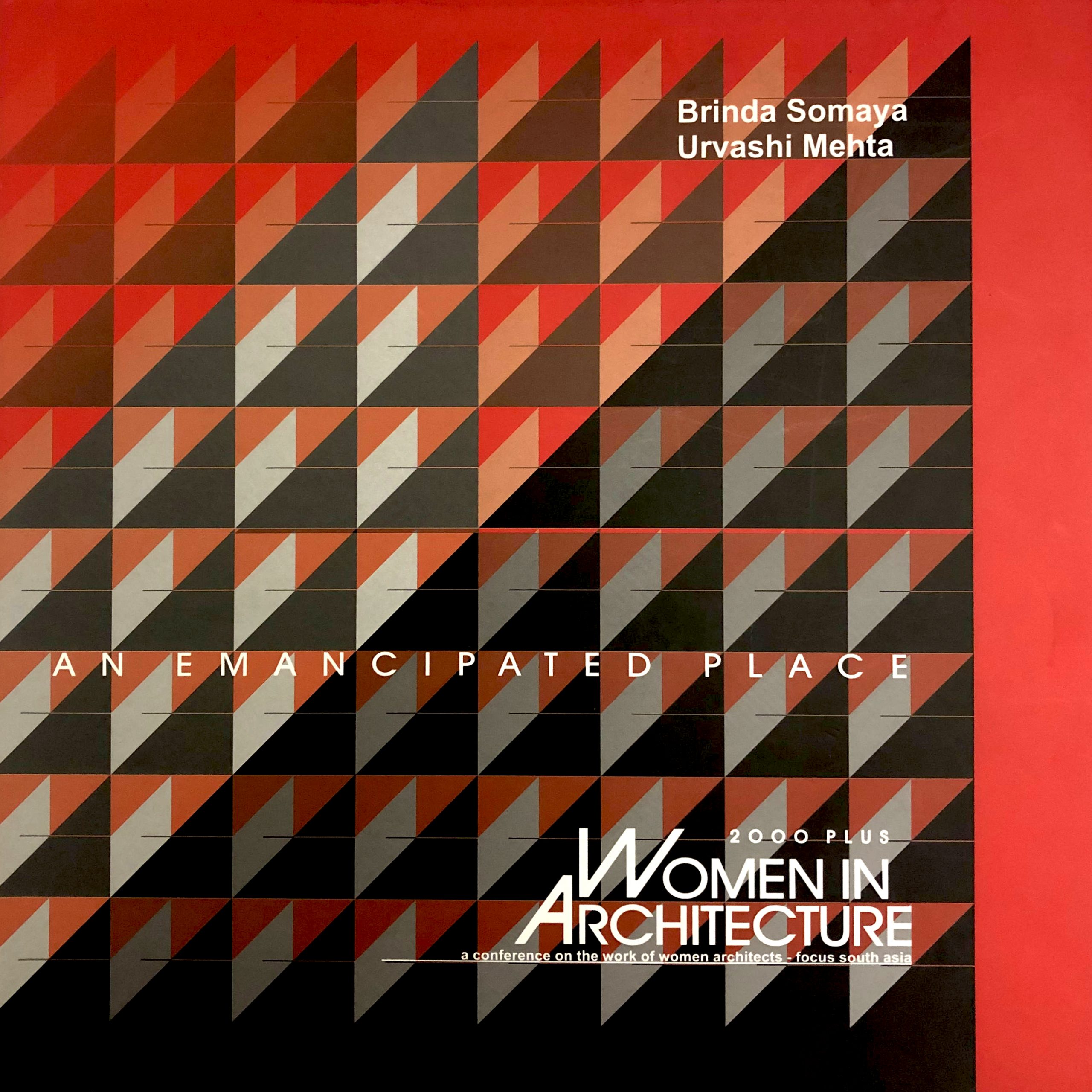
Brinda Somaya on An Emancipated Place

When I decided to organise the first conference of Women Architects, which was named Women in Architecture 2000 Plus I created it on the foundation that it be a celebration of women’s work. I did not want to focus on the negativity that we all have experienced in some way or another in our careers, […]

8 April, 2021

Blanca Vives on Invisible Women: Exposing Data Bias in a World Designed for Men

The architecture of bias in artificial intelligence “Seeing men as the human default is fundamental to the structure of human society”. This is the premise of Caroline Criado’s book. The text depicts how female perspective and needs have often been envisioned as a deviation of men’s and thus have been misrepresented in all aspects of […]

9 February, 2022

Bilge Bal on Muhafaza/Mimarlık

Muhafaza/Mimarlık, which translates into English as Conservation/Architecture, is a conservation history of Turkey. It examines the conservation policies and ideologies of Istanbul’s architectural heritage from the Tanzimat Period to the end of the 1960s. It explores the approaches of governments, architects and intellectuals and discusses the resulting conservation projects and practices. The compilation also has […]

13 April, 2023

Bene Wahlbrink on Sarah P. Harkness and the Idea of Collaboration

“There are two ways to go – towards competition or towards collaboration.” The discourse about how to work together within the complex field of architecture still poses many inconsistencies. How are we going to face the journey ahead of us? Which course do we want to pursue? And above all, with whom do we want […]

10 April, 2023

Beatriz Geovanini, Jessica Joia and Paulo Victor França on Scenes in the Life of Harriet Tubman

These student projects respond to Harriet Tubman as a figure to inspire liberatory constructions. The starting point for their research was the 1869 book Scenes in the Life of Harriet Tubman by Sarah H. Bradford. The projects are from the Masters of Architecture Theory Seminar Oppressed Fantasies, Liberatory Constructions led by Anna Kostreva. It took […]

16 February, 2026

Asli Çiçek on A Life of Creation

Charlotte Perriand lived through almost the entire twentieth century – she was 96 years old when she died in 1999 and produced work for 70 years in a row. Though not usually attracted to autobiographies, I was very curious to read her story in her own words. As first-hand life stories tend to be, there […]

11 February, 2021